


What is Mobile App Development?
Last updated on April 20, 2026 by RGB Web Tech
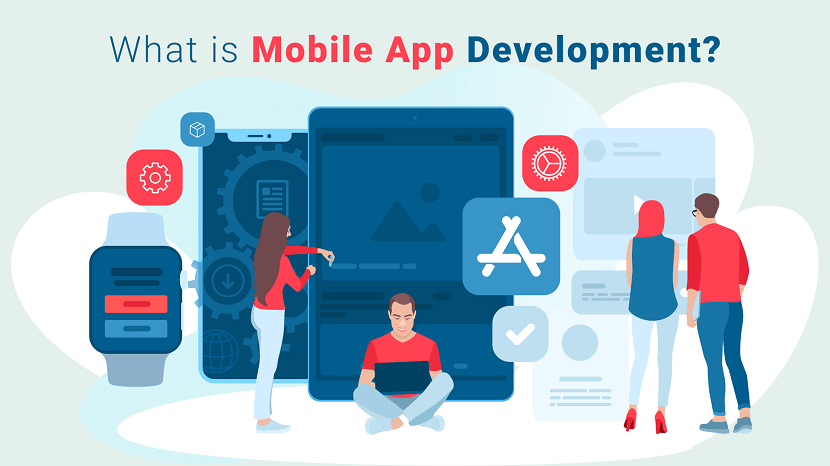
The mobile app development industry is going through a transformative phase. With the advancement in micro-processing technologies, you will be able to run mobile applications on multiple platforms. For example, apps built for mobiles will run seamlessly on desktops in the coming years. Moreover, mobile apps built with Flutter or React Native will work on Android Phones, iPhones, Macs, as well as PCs. But before we get more in-depth, let’s dig into the mobile app usage statistics to understand how users are spending their time using mobile phones, and what are the opportunities in building your own mobile application.
Mobile App Development Lifecycle
There are over 3.5 billion smartphone users worldwide, so there is no doubt that the industry is healthy and thriving. Stats are growing steadily, without any indications of slowing down. And studies show that an average American checks their phone at least once every twelve minutes, and over 10% of these people check their phone about every four minutes. There are some more statistics to keep in mind.
- People spend over half of the time they spend with digital media on mobile.
- Smartphone users spend 90% of their screen-on time using mobile apps.
- Over 85% of consumers prefer native apps over mobile cross websites.
- Revenue from mobile apps is set to cross $693 billion in 2021.
- The average consumer has over 30 apps installed on their device.
- An average user spends about 35 hours per month using mobile apps.
The statistics are motivating for anyone who wishes to build or develop a mobile app. But before we jump to any conclusions, let’s understand the exact process for mobile app development. Although it sounds very lucrative to build a mobile app to get a piece of the billion-dollar pie, the decision needs thought, strategy and planning. The fact also states that your app will be competing with over 1.5 million applications on the Google Play Store and Apple’s App Store.
What is Mobile App Development?
Mobile app development is a process for building mobile applications that run on mobile devices. These applications can either be pre-installed or downloaded and installed by the user later. They use the network capabilities of the device to work computing resources remotely. Hence, the mobile app development process requires creating software that can be installed on the device, and enabling backend services for data access through APIs, and testing the application on target devices.
To develop scalable mobile apps, you also need to consider screen sizes, hardware requirements, and many other aspects of the app development process. With an increasing number of jobs in the mobile app development industry, it is essential that the process is well defined and understood by entrepreneurs, startups, and especially developers.
Types of Mobile Apps
- Native Apps
- Cross-Platform Apps
- Hybrid Apps
- Progressive Web Apps
Mobile App Development Platforms
The two most important mobile app platforms are iOS from Apple Inc. and Android from Google. iOS is Apple’s proprietary mobile operating system built specifically for iPhones. Android, however, runs on mobile devices manufactured by various OEMs, including Google.
While there are many similarities between the two, different software development kits (SDKs) are used for different platforms. Apple uses iOS exclusively for their own devices, while Google has made Android available for other companies that meet specific requirements. Developers have built over 1.5 million applications for both platforms to date.
- React Native
- Flutter
- Xamarin
- Swiftic
- Ionic
- Apache Cordova
- jQuery Mobile
- Native Scripts
- Sencha Ext JS
- Onsen UI
Which is the best programming language for mobile apps?
There are several programming languages for different sorts of tasks. Choosing the right language for the mobile app is different from choosing one to learn. The right selection yields solutions that are concise, easy to code, easy to scale, easy to debug and fix.
Often people will tell you that there is no choice and that all languages are equal and are developed to fulfill a particular purpose. However, it can be quite confusing, if you are new in the mobile development arena and lack information about programming languages.
So, if you are in a confused mess, the following factors can you help you choose the best language easily:
- The targeted platform.
- Elasticity of the language.
- The time to produce.
- Performance, support, and community.
- The purpose of building the app.
- Efficiencies of the programmer.
Here is a top mobile app development languages
- JavaScript
- Kotlin
- C++
- C#
- Python
- PHP
- Swift
- Objective C
- JAVA
- HTML 5
- Ruby
- Rust
- Lua
- Action Script
- SQL
- Dart
Best Practices for Mobile App Deployment
Once the user installs the application, you should work on minimizing uninstalls, delivering the best user experience, keeping up with the competition, and achieving maximum financial benefits in the long run. Regularly maintaining your mobile application to create a sustainable brand image in the minds of the users. Here’s a list of best practices for long-term app development.
- Monitor the performance of your mobile application. Keep an eye on loading types, if there are any lags, or if there are any responsiveness issues. This will help you stay ready with your analytics report. Analyze your retention rates, churn rates, and try to understand usage patterns.
- Keeping your user interface updated is also one of the ways to maintain your mobile application. Customers align themselves with changing styles, trends, habits, and other essential features of the apps that need constant updating. If you keep your app interface the same, your customers might gradually start preferring other competing apps with similar features.
- Ensure that your app supports the latest software updates and hardware updates. A new version of the mobile operating system is released every year. Think about how many mobile devices can be upgraded to the latest version of that OS, and thus your app?
- Fixing bugs can win customers. No software application is ever published with proper testing. However, bugs are an integral part of mobile app development. Fixing bugs can display your faith and dedication towards your users and also towards your mobile phones.
- Regularly add new features to your app. You can do this by observing how users are interacting with your app. With the help of insights received, you can discover what’s working for your user, and what isn’t.
FAQs - Mobile App Development
1. What is App Development?
Mobile application development is the process of making software for smartphones and digital assistants, most commonly for Android and iOS. The software can be preinstalled on the device, downloaded from a mobile app store or accessed through a mobile web browser.
2. What is a Native App?
Native apps are developed for specific mobile operating systems such as iOS or Android. Platform-specific language is used to build these apps. For example, (native) Android apps use Java, while iOS apps use Objective – C or Swift.
3. What are cross-platform apps?
Cross-platform mobile development is the creation of software applications that are compatible with multiple mobile operating systems. Originally, the complexity of developing mobile apps was compounded by the difficulty of building out a backend that worked across multiple platforms.
4. What are Hybrid Apps?
Hybrid apps are essentially web apps that have been put in a native app shell. Once they are downloaded from an app store and installed locally, the shell is able to connect to whatever capabilities the mobile platform provides through a browser that's embedded in the app.
5. What is Progressive web Apps?
A progressive web application, commonly known as a progressive web app, is a type of application software delivered through the web, built using common web technologies including HTML, CSS, JavaScript, and WebAssembly.
6. What Are The Best Mobile App Development Platforms?
BuildFire, Flutter, Microsoft Xamarin and Adobe PhoneGap are the best mobile app development platforms.
7. Mobile App Development Platforms
The two most important mobile app platforms are iOS from Apple Inc. and Android from Google. iOS is Apple’s proprietary mobile operating system built specifically for iPhones. Android, however, runs on mobile devices manufactured by various OEMs, including Google.
Conclusion
There’s a lot to unpack with mobile app development. But whether you’re creating cross-platform apps or native apps, you always need to prioritize the user experience.
Your app’s functionality needs to meet its primary use case, and the interactive features must be easy to navigate.
There are tons of different paths to take for app development. The best option for you depends on your budget, goals, timeline, technical skills, and app complexity,
Overall, BuildFire is the best option to consider because the platform is so versatile. BuildFire has a no-code DIY solution that’s great for entrepreneurs. We also offer full-service app development that includes post-launch maintenance and support.
Want to learn more? Request a free consultation to chat with one of our app development experts.
If you found this article helpful, we encourage you to share it on your social media platforms—because sharing is caring! For more information about article submissions on our website, feel free to reach out to us via email.
Send an email
Written by RGB Web Tech
Latest Technology Trends
Latest technology trends shaping the future, including AI advancements, blockchain innovation, 5G connectivity, IoT integration, and sustainable tech solutions. Explore breakthroughs in quantum computing, cybersecurity, augmented reality, and edge computing. Stay ahead with insights into transformative technologies driving innovation across industries and revolutionizing how we live, work, and connect.
How Businesses Can Build Apps That Truly Perform
Last updated on April 20, 2026 by RGB Web Tech

Building an app is no longer just about having a digital presence. For many businesses, an app is now a core part of how they serve customers, streamline operations, increase sales, and build loyalty. However, not every app performs well. Some are downloaded once and forgotten. Others frustrate users with slow loading times, poor navigation, or features that do not solve real problems.
A high-performing app is useful, reliable, intuitive, and aligned with clear business goals. To achieve this, businesses need to think beyond design alone. The strongest apps are built with strategy, user insight, technical expertise, and long-term improvement in mind.
Start with a Clear Purpose
Before any design or development work begins, businesses must understand exactly why the app is being built. Is it designed to improve customer service, increase bookings, support ecommerce sales, give staff better access to internal tools, or reduce manual admin?
Without a clear purpose, an app can quickly become overloaded with unnecessary features. This often leads to higher costs, longer timelines, and a weaker user experience. Every feature should connect back to a specific business objective or user need.
A strong app strategy starts with simple questions. Who will use the app? What problem does it solve? Why would someone return to it? What action should users be able to complete quickly? The answers help shape everything from functionality to design.
Put the User Experience First
Performance is not only about speed or technical stability. It is also about how easily users can get what they need. If an app is confusing, cluttered, or difficult to navigate, people will abandon it, even if the core idea is strong.
Good user experience should feel natural. Users should be able to move through the app without needing instructions. Menus should be simple. Buttons should be clear. Content should be easy to read. The most important actions, such as making a purchase, booking a service, submitting a request, or accessing account details, should be quick and frictionless.
Build on Strong Technical Foundations
A great-looking app will still fail if it is slow, unstable, or unable to handle real-world usage. Technical performance should be considered from the start, not treated as something to fix after the launch.
This includes choosing the right development approach, building secure architecture, optimising load times, testing across devices, and making sure the app can scale as demand grows. Businesses also need to consider integrations with existing systems, such as payment platforms, booking software, CRM tools, inventory systems, or internal databases.
Working with experienced app developers in Ireland can help businesses make smarter technical decisions early, ensuring the app is built around performance, usability, and long-term growth.
Focus on the Right Features
One of the biggest mistakes businesses make is trying to include too much in the first version of an app. A successful app does not need to do everything at launch. It needs to do the right things well.
Prioritising core features helps keep the app focused, efficient, and easier to use. For example, a retail app may need fast product browsing, secure checkout, and order tracking. A healthcare app may need appointment booking, secure messaging, and reminders. An internal business app may need dashboards, task management, document access, and reporting.
The best approach is often to launch with a strong minimum viable product, then improve it based on real user feedback. This reduces risk and gives businesses valuable insight into what users actually want.
Test Before and After Launch
Testing is essential for building an app that truly performs. It helps identify bugs, usability issues, security risks, and performance problems before they affect users.
Testing should cover different devices, screen sizes, operating systems, connection speeds, and user journeys. It should also look at how the app behaves under pressure. Can it handle more users than expected? Are forms, payments, notifications, and integrations working properly?
However, testing should not stop at launch. Once the app is live, businesses should monitor crash reports, user behaviour, reviews, support requests, and analytics. These insights can reveal where users are dropping off, which features are most valuable, and where improvements are needed.
Keep Security and Trust at the Centre
Users expect apps to protect their data. Whether the app handles payments, personal details, business information, health data, or login credentials, security must be built in from the beginning.
This means using secure authentication, encrypted data transfer, regular updates, careful permission management, and compliance with relevant data protection requirements. Businesses should also be transparent about how user data is collected, stored, and used.
Plan for Continuous Improvement
An app is not a one-time project. User expectations change, operating systems update, competitors evolve, and business goals shift. To keep performing, an app needs ongoing support, maintenance, and optimisation.
Regular updates can improve speed, fix bugs, introduce useful features, enhance accessibility, and keep the app compatible with new devices. Businesses should also use analytics to guide decisions rather than relying on assumptions.
If you found this article helpful, we encourage you to share it on your social media platforms—because sharing is caring! For more information about article submissions on our website, feel free to reach out to us via email.
Send an emailWritten by RGB Web Tech
Latest Technology Trends
Latest technology trends shaping the future, including AI advancements, blockchain innovation, 5G connectivity, IoT integration, and sustainable tech solutions. Explore breakthroughs in quantum computing, cybersecurity, augmented reality, and edge computing. Stay ahead with insights into transformative technologies driving innovation across industries and revolutionizing how we live, work, and connect.