


Bluehost Web Hosting Plans Review
Last updated on January 19, 2025 by RGB Web Tech

Bluehost started in 1996 and steadily grew to become one of the largest web hosting companies in the world. It now powers more than 2 million websites from all over the world.
Bluehost has a long-standing relationship with the WordPress community. They have been an official WordPress.org recommended web host since 2006.
They pride themselves in their 24/7 customer support, great hosting infrastructure, and support for the free open source software like WordPress.
On top of that, they are offering RGB Web Tech users an exclusive 63% off discount, a Free Domain, Free SSL, and a free Site Builder with templates.

Top Features
- Unlimited Websites
- Unmetered SSD Storage
- Unmetered Bandwidth
- 100+ Free WordPress Themes
- Free Domain for 1 Year
- Free Staging Environment
WordPress Website Builder
- Quick-Start AI Powered Templates
- Drag-n-Drop Builder
- Mobile-Responsive Themes
- Automatic Site Optimization
- 100+ Free Stock Image Library
Performance, Security, & Marketing
- SSL Certificate Protection
- Automatic Daily Malware Scan
- Speed Boosting CDN
- Website Stats Dashboard
- Email Marketing Tool
- WordPress Website Migration
- Free Bluehost SEO Tools
- Microsoft Office Email - Free 30 Days
- Domain Privacy
- Daily Website Backup
Bluehost Review Summary
- Performance grade - A+
- Average load time - 1.48 ms
- Average response time - 1.26 ms
- Free domain - Yes
- Free SSL - Yes
- 1-click WordPress - Yes
- Support - Phone / Live Chat / Knowledge base
Bottom line: In our Bluehost review, we found them to be reliable, fast, and affordable with friendly 24/7 customer support.
That’s why we’ve chosen to recommend Bluehost as one of the best WordPress hosting companies.
Now let’s dive into our detailed Bluehost hosting review so that you can decide for yourself.
In this comprehensive Bluehost review, we’ll put their promises to test with a rigorous and through analysis using industry standard benchmarking tools.
Following are the areas we’ll look into:
1. Speed: How fast will your website load with Bluehost? We will test their speed and server response time to assess that.
2. Performance: How does Bluehost perform under traffic spikes? We’ll test that by performing the stress test and see how well it performs under traffic.
3. Reliability: Will your website be available 24/7/365 without any downtime?
4. Customer Support: Can you count on Bluehost’s customer support when you immediately need help with your website?
5. Features: Do they offer all the features that you’ll need to build your website?
6. Pricing: Do they have the best pricing in the industry? Are there any Bluehost deals that can save you money?
This is our complete Bluehost review and we’ll be doing an in-depth analysis of Bluehost pros and cons. If you don’t want to read the full review, here is the quick scorecard of Bluehost with our verdict right below it.
Pros and Cons of Bluehost
All best web hosting services have their pros and cons. Some you can live with, and some you cannot ignore.
Here are the pros and cons of Bluehost that we learned.
Pros
First, let’s take a look at the advantages that make Bluehost the top choice.
1. Pricing: Their hosting plans are well within the reach of most users, particularly those who are just starting out.
2. Reliability: They power a large number of websites with minimum downtime.
3. No hidden charges: There are no hidden fees when signing up for your account.
4. Free domain: You get a free domain name for the first year when you sign up.
5. Free CDN + SSL: For each website, you get a free SSL certificate and free Cloudflare CDN to block malware and improve security.
6. Money Back Guarantee: They offer a 30 day money back guarantee on all plans.
Cons
As we mentioned earlier, there are always downsides with every hosting company. The following are some disadvantages of choosing Bluehost as your host.
1. Higher Domain Renewal Price: Their free domain renewal price is higher than average.
2. Upselling Addons: They have an aggressive upsell process during signup. But you can easily uncheck SiteLock and all other addons if you don’t need them.
Bluehost Hosting Plans and Features
Bluehost offers a variety of hosting plans for all budgets and sizes. Let’s take a look at Bluehost hosting plans and their features.
1. Shared Hosting:Shared hosting is the perfect way to start a new website with low traffic volume. In a shared hosting environment, your website shares server resources with other websites.
2. Cloud Hosting: A more reliable upgrade to the shared hosting plan. It allows you to utilize multiple cloud servers, allowing your website to automatically switch to a different server in case of a hardware failure or high traffic.
3. WordPress Hosting: Their WordPress plans are designed specifically for WordPress powered websites. It is optimized to run WordPress and can even protect your WordPress site against common threats.
4. VPS (Virtual Private Server) Hosting: An upgrade to shared WordPress hosting, VPS hosting allows you to virtual dedicated resources in a shared environment.
5. Dedicated Hosting Server: A dedicated hosting server for your website, means you will have all the resources of the dedicated server to yourself. The downside is that you will have to manage the server on your own.
All Bluehost hosting plans allow you to install WordPress with 1-click.
All plans come with an easy-to-use hosting control panel where you can manage your hosting, create databases, etc.
Bluehost has a custom control panel that improves ease of use for beginners. It also uses a customized version of the cPanel hosting dashboard for more advanced options.
Breakdown of Bluehost’s Shared Hosting Plans
Bluehost offers a shared hosting package suitable for starter websites. Their shared plan is available at four different levels.
Let’s take a look at Bluehost pricing and what’s included in each plan.
1. Basic: The basic plan only allows you to host one website. It hosts one domain and 25 subdomains, 50GB SSD storage, 5 email accounts of 100 MB disk space for each account. For the first term you’ll pay $2.75 per month. When you renew the account, you’ll have to pay $8.99 per month.
2. Plus: The Plus plan includes unlimited websites with unlimited storage space and unmetered bandwidth. You’ll also get unlimited email accounts. The price for the first term starts from $4.95 per month. When you renew the account, you’ll have to pay $11.99 per month.
3. Choice Plus: The Choice Plus plan includes all features of the plus plan. You will also get free domain privacy, and automated daily backups powered by CodeGuard as extras worth over $80/year. The price for the first term is $5.45 per month. When renewing, you’ll have to pay $16.99 per month.
4. Pro: The Pro plan starts from $13.95 per month for the first term after that you’ll pay $23.99 per month. It includes all features of above plans + dedicated IP address.
If you are just starting your website, then you can select any of these plans. You can easily upgrade your hosting plan as your website grows.
Bluehost Customer Support and Service
We all need help every now and then. It is really important that you choose a web hosting company that offers help and support when you need it.
Bluehost maintains a huge library of articles, step by step guides, and video tutorials as part of their extensive knowledge base. This is a huge help for beginners and most common issues can be quickly resolved by a simple search.
However, sometimes you may need to talk to an individual to get more help.
Bluehost offers a 24/7 support system where you can talk to their support team representatives using live chat or phone support. This is really helpful when you need quick help from technical support staff and you know they are just one-click away.
One thing that is missing is the ticket based support system. Bluehost recently decided to eliminate ticket-based support to focus on a personal approach of live chat support and phone-based support.
However, some users may still miss the ticket-based support system which is particularly good if your issue cannot be resolved in one live chat or phone session.
FAQs - Bluehost Web Hosting
In this detailed Bluehost review we have tried to cover all the aspects of their hosting services. The following are some of the most frequently asked questions about Bluehost that we hear from our users.
1. Can I make an online store using WooCommerce on Bluehost?
Answer : Yes, you can. In fact, Bluehost is one of the best WooCommerce hosting service providers. Their starter plan is perfect to start an online store.However, keep in mind that you’ll need to upgrade as your store starts getting more traffic. Hopefully, by that time you’ll be making enough money to justify the upgrade costs.
2. Is Bluehost good for beginners?
Answer : Yes. Bluehost is the most beginner-friendly WordPress hosting company on the market. They automatically install WordPress for you when you sign up. They also have an easy to use control panel which allows you to manage your hosting account by yourself.There is plenty of help available with detailed guides, video tutorials, and articles. You also have 24/7 access to their expert support via live chat and phone.
3. Can Bluehost handle high traffic?
Answer : Their shared hosting plans are suitable for starter websites and small businesses. In our stress test, their shared hosting plan was able to handle 100 virtual users without any slowdown.These plans can handle reasonable and sudden traffic spikes. However, they are still quite limited in server resources. If you are expecting high traffic then you’ll need to upgrade your hosting plan.
4. Why use Bluehost for WordPress?
Answer : Bluehost is one of the largest hosting companies in the world and an officially recommended WordPress hosting provider. They have been supporting the WordPress community for a very long time and know WordPress very well.Their platform is highly optimized for WordPress websites and engineered to run WordPress at peak performance. They also have WordPress engineers in their team so you know your website is in safe hands.
5. Do I need a credit card to sign up with Bluehost?
Answer : Bluehost accepts credit cards but you can choose to show more payment options during checkout and select PayPal as your payment method if you wish.
6. Is Bluehost better than GoDaddy?
Answer : Bluehost is better than GoDaddy because we believe Bluehost support is better. My Sites dashboard and overall onboarding experience is a lot more beginner friendly. Not to mention, Bluehost offers better pricing for small businesses.
7. How does Bluehost compare with SiteGround and HostGator?
Answer : When comparing Bluehost with SiteGround and HostGator, there are several pros and cons you should be aware of.Bluehost offers more value for the price when compared to SiteGround. Their plans start at $2.75 per month and include a free domain, whereas SiteGround plans start at $4.99 and do not include any free domain.On the other hand, the SiteGround platform comes with better speed and security features. For more details, see our comparison of Bluehost vs SiteGround vs WP Engine.In terms of Bluehost vs HostGator, they’re pretty similar when it comes to hosting CPU resources, functionality, site migration tools, pricing, and more. Bluehost is also more comparable with shared hosting providers like Inmotion hosting or Dreamhost. We find Bluehost user experience to be slightly better as they’ve invested heavily in their WordPress website builder platform.
8. Where are Bluehost servers located?
Answer : Bluehost operates its own in-house data center located in Utah, US. It is a massive 50,000 square feet facility that serves as their primary data center.
9. What Bluehost plan should I get?
Answer : If you are just starting out a brand new website, blog, or online store, then we recommend starting with their basic plan. It is good enough for a starter website and you can always upgrade later.Ready to start your website with Bluehost? Click here to select your Bluehost plan.
10. What are the types of web hosting?
Answer : This answer will be different for everyone. It depends on the type of website you have, the resources you need, your budget, and traffic.We gave our top recommendation for each category in this guide, so that’s the best place for you to start your search.Once you know what you need, you can narrow your options. To figure out what category you fall in, here’s a quick recap of the different hosting types.
Conclusion: Is Bluehost the Right Choice for You?
After reading this review, you might be wondering if Bluehost is the right choice for your website?
Bluehost is often ranked #1 web hosting provider by many websites. They offer a wide range of hosting options with tons of features that help you easily build your website.
All their hosting plans include expert 24/7 customer support from knowledgeable staff.
Most importantly, they offer affordable starter plans that fit any budget requirement.
If you are just starting out, then you cannot go wrong signing up for a Bluehost shared hosting plan. It’s easy on your pocket and comes with all the right tools. As your site grows you can easily upgrade your hosting plan accordingly.
Ready to start your website with Bluehost? Click here to select your Bluehost plan.
Alternatives - Web Hosting Providers
If you want to explore more web hosting plans, here is some web hosting services provider companies as below:
1
2

3

4

5

Read More : You can explore here 30+ Best Web Hosting and Domain name Providers 2023
Video - Best Web Hosting For Small Business
Affordable Website Hosting for your domainIf you found this article helpful, we encourage you to share it on your social media platforms—because sharing is caring! For more information about article submissions on our website, feel free to reach out to us via email.
Send an email
Written by RGB Web Tech
Latest Technology Trends
Latest technology trends shaping the future, including AI advancements, blockchain innovation, 5G connectivity, IoT integration, and sustainable tech solutions. Explore breakthroughs in quantum computing, cybersecurity, augmented reality, and edge computing. Stay ahead with insights into transformative technologies driving innovation across industries and revolutionizing how we live, work, and connect.
GoDaddy Web Hosting Review
Last updated on January 19, 2025 by RGB Web Tech


GoDaddy Inc. is an American publicly traded Internet domain registrar and web hosting company. Its headquarters is in Scottsdale, Arizona, and incorporated in Delaware.
The Best Website Hosting providers will not be complete without mentioning GoDaddy, which is also known for their affordable website hosting plans. At only $1 per month, you will get not only website hosting but even free domain registration. They have global data centers, which can assure that speed will not be an issue. Plus, they are also guaranteeing 99.9% uptime. The cheapest plan also comes with unmetered bandwidth, 100 GB of storage, and a free domain when you sign up for the annual plan.
GoDaddy Hosting Features
GoDaddy’s platform is optimized for WordPress, with high-performance features like load-balanced servers. WordPress Hosting from GoDaddy uses servers modified to ensure WordPress websites run smoothly.
Their WordPress search engine optimization (SEO) plugin reviews pages and automatically handles basic SEO needs so search engines can easily find their client’s website. This service includes a security feature that finds and removes malware before it does damage available in their Ultimate and E-commerce hosting plans.
1. Easy-to-use Control Panel : Includes industry-standard cPanel to install apps, manage backups and security.
2. 1-click install of over 150 Free Apps : Provides access to over 150 free apps to create CMS sites (WordPress, Joomla), forums and blogs through Installatron.
3. 24/7 Network Security : Offers peace of mind, knowing network security and DDoS protection is monitored around the clock.
4. Resources on-demand : If you require more power for your site, seamlessly increase your CPU/RAM, I/O, and storage with a 1-click purchase.
5. Global Data Centers : Gives faster page loads and a better visitor experience with nearby, state-of-the-art data centers in North America, Europe, or Asia-Pacific.
6. 1-click Domain Name Setup : GoDaddy registered domain links your site to your domain name.
Pros and Cons of GoDaddy Web Hosting
There’s no question GoDaddy is one of the biggest names out there as far as how recognizable it is. It also houses the most domains globally, with over 17 million domain names on its roster.
Still, there are pros and cons to choosing GoDaddy as your web hosting provider. Here are the more prominent ones to take into account.
Pros
1. 24/7 Support : GoDaddy ensures it’s always within reach if you ever need a hand or run into trouble with your site. You can either reach them by phone or use its handy chat support option.
2. Lots of Storage : When you look through and compare GoDaddy’s hosting plans, it’s generous with its unmetered bandwidth feature for all tiers.
3. Affordable .com Domain : GoDaddy offers you the chance to snag a domain for only 99 cents for the first year, which can save you money as you begin.
4. Unlimited Site Hosting : Most GoDaddy plans let you host an unlimited number of websites except for its cheapest Economy plan.
5. Convenience : Since you can manage your domain and website in one place, GoDaddy offers convenience in managing both from one dashboard.
Cons
1. Constant Upsells : GoDaddy is notorious when it comes to its upsells through every step of the checkout process. While it does honor the prices for each tier if that’s all you’re going for, it’s quick to suggest add-ons and extra features you might not need.
2. Expensive Renewal Rate : This is one of the reasons why I think GoDaddy is great for beginner sites that just want to get their foot in the door with hosting. Once that initial year is up, GoDaddy’s renewal rates can start to get costly for what you get.
3. Charges for Add-ons : Other hosting providers throw in free first-year domain registration, for example, or include free SSL certification as part of its plans. GoDaddy does not always include these features depending on the plan you choose and can charge extra for them.
4. Inconsistent Customer Support : Support for GoDaddy isn’t always top-notch as convenience and reliability are concerned. There is always the possibility of long wait times to be connected to the right person.
FAQs - GoDaddy Hosting Review
1. Who owns GoDaddy?
Answer : GoDaddy was founded by Bob Parsons. About 70 percent of GoDaddy was sold to a private equity consortium several years ago, and the company has since gone public on NASDAQ with the stock ticker GDDY.
2. Where are GoDaddy servers located?
Answer : GoDaddy owns a massive 320,000 square feet data center that is located in Phoenix Arizona. The company also has data centers in Los Angeles, Chicago and Ashburn, Virginia, along with international facilities in Amsterdam and Singapore.
3. Does unlimited hosting mean what I think it means?
Answer : Yes and no. Shared plans do come with unlimited storage, but you are limited to 250,000 files/folders (and each email counts as a file). Furthermore, there are certain “soft” caps on other resources — if your usage exceeds these caps, GoDaddy may throttle the resources available to your website and, in extreme cases, may even prevent your use of the resources, leading to site downtime.
4. What kind of customer support do I get?
Answer : How do I contact GoDaddy’s support? You get first class 24/7 customer support via phone, live chat.
5. What are GoDaddy’s nameservers?
Answer : If your domain name is registered someplace else (for example with Namecheap) then you need to update the domain’s nameservers. You will find the correct NS values in your control panel. For example, GoDaddy’s default DNS nameservers look like: ns01.domaincontrol.com and ns02.domaincontrol.com. Their premium DNS nameservers look like: pdns01.domaincontrol.com and pdns02.domaincontrol.com.
6. How do I request a refund?
Answer : You can contact GoDaddy using live chat (Live chat can be launched via the “Chat with us” button on their website) or phone. To request a refund go to the “Contact Us”, select your country and perform a toll-free phone call.
7. What if I decide to cancel my hosting package with GoDaddy?
Answer : GoDaddy offers a money-back guarantee however it is related to the length of your web hosting plan. So do read the fine prints. However, you do qualify for a 45-day money-return guarantee if you have selected their annual plan.
8. What features does GoDaddy's website builder offer?
Answer : First of all, you’ll find many free templates to start customizing your website with. You’ll also find a nice library of 8,700 free photos. Another feature you can add to your website is a shopping cart. If you’re really short on time, GoDaddy’s Website Builder offers you pre-built websites with pre-written words and pictures. It just takes a mere 5 minutes to perform a tweak and you’re good to go.
9. What is GoDaddy’s cheapest hosting plan?
Answer : GoDaddy’s cheapest hosting plan is $2.99 per month and it comes with unlimited bandwidth and 100 GB storage and a free domain (for the first year) is included with the purchase.
10. Can I automatically install WordPress/automate WordPress installation?
Answer : WordPress installation is manual (though easy), but GoDaddy provides you with a WordPress managing tool suite, which automatizes your WordPress site backups and software updates. GoDaddy also enhances the performance of your WordPress website and offers you 24/7/365 specialized tech support. Managed WordPress plans come with the WordPress core pre-installed.
11. Which GoDaddy plan is best for WordPress sites?
Answer : The best plan for self-hosted WordPress users depends on the total number of sites hosted. Although the Developer plan is the most expensive one, it’s meant for people who own 5 websites and have up to 800,000 monthly visitors. On the other hand, the Ultimate plan can handle one or two WordPress sites, and 400,000 monthly visitors. It also includes malware protection.GoDaddy also offers managed WordPress options, which include bonuses like WordPress installed by default, staging areas, and dedicated phone support lines (no live chat, though).
Alternatives - Web Hosting Providers
If you want to explore more web hosting plans, here is some web hosting services provider companies as below:
1
2
3
4
5
Read More : You can explore here 30+ Best Web Hosting and Domain name Providers 2023
Video - Best Web Hosting For Small Business
Affordable Website Hosting for your domainIf you found this article helpful, we encourage you to share it on your social media platforms—because sharing is caring! For more information about article submissions on our website, feel free to reach out to us via email.
Send an emailWritten by RGB Web Tech
Latest Technology Trends
Latest technology trends shaping the future, including AI advancements, blockchain innovation, 5G connectivity, IoT integration, and sustainable tech solutions. Explore breakthroughs in quantum computing, cybersecurity, augmented reality, and edge computing. Stay ahead with insights into transformative technologies driving innovation across industries and revolutionizing how we live, work, and connect.
Hostinger Web Hosting Review
Last updated on January 19, 2025 by RGB Web Tech
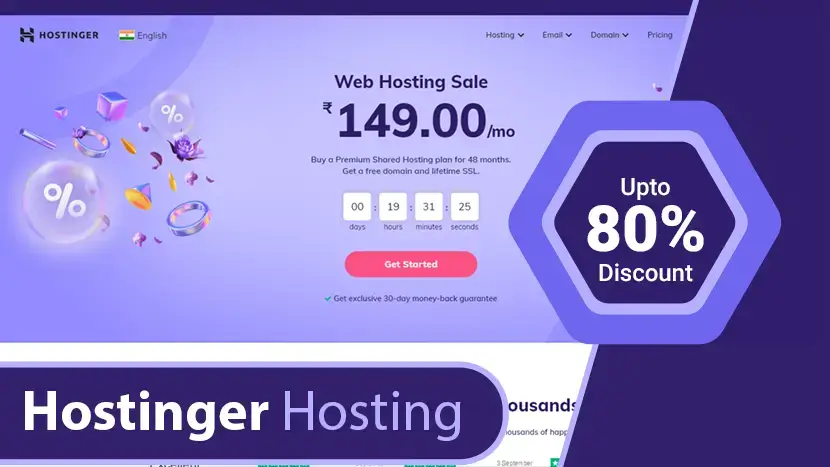
Hostinger is known for its inexpensive shared, cloud, and VPS hosting. All of their plans come with a 30-day money-back guarantee and a free website builder. Do these low-cost plans scrimp on features? Let’s take a closer look at Hostinger’s server speeds, performance, ease-of-use, and customer service.
Hostinger may be best known for its deeply discounted hosting. These Hostinger hosting plans are incredibly cheap compared to industry averages. All plans come with a 30-day free trial.
Hostinger provides free SSL certificates on all plans except for the entry-level Single Shared Hosting plan. SSL certificates are a must for all sites. Browsers may mark your site as ‘unsafe’ if you do not have an SSL certificate. Many hosting companies charge extra for SSL certificates.
Features
- Free Domain (₹679.00 value)
- Free SSL (₹855.00 value)
- Free Email
- 200 GB SSD Storage
- ~100000 Visits Monthly
- 30 Days Money Back Guarantee
- Daily Backups (₹660.00 value)
- Free CDN (₹545.00 value)
- Cloudflare Protected Nameservers
- 24/7/365 Support
- 99.9% Uptime Guarantee
- Unlimited Bandwidth
- Managed WordPress
- Unlimited Databases
- DNS Management
- 100 Websites
- 100 Subdomains
- Unlimited FTP Account
- Unlimited Cronjobs
What Are the Pros and Cons of Hostinger?
Pros
- Comprehensive knowledge base.
- User-friendly control panel.
- Competitive Pricing.
- Multiple Data Centers.
- Excellent onboarding.
- Free nightly backups.
- 30-day money-back guarantee.
- Free SSL & Domain name on entry-level plan
Cons
- Inconsistent website speed.
- Refund exceptions.
- Limited Support.
How is Hostinger’s Performance and Uptime?
Hostinger provides good server response speeds. Over the period from April 2019 through June 2019, our tests showed an average response of 509 ms.
Hostinger uses various technologies to boost site loading speeds, including:
1. SSDs: Solid-state drives are faster and more reliable than HDDs (hard-disk drives).
2. HTTP/2 and HTTP/3 (Quic): This is a network protocol that increases speed.
3. PHP 7: Most modern dynamic websites (like those built with WordPress) use the PHP language. PHP 7 provides greater speed and reliability.
4. Litespeed: Litespeed is a brand of web servers known for its speed.
5. GZIP compression: This is a form of file compression used to increase speed.
Uptime refers to the amount of time that servers are up and working correctly from the host’s end. A high uptime indicates that a host is stable, well-built, and can fend off network threats.
Hostinger provides a 99.9% uptime guarantee.
How Does Hostinger Keep Your Site Secure?
Hostinger’s SSL security guarantees lifetime security. Their web hosting plan offers a free SSL certificate to provide a safe online environment as it offers the highest level of encryption and immediate access results. Their servers have advanced security modules (such as mod_security, Suhosin PHP hardening, PHP open_basedir protection, and others) that give the highest security level available today.
Their free SSL certificate will ensure the safety of their client’s data including their clients’ target audience. Hostinger’s SSL for WordPress will also protect their clients’ blogs or e-commerce shops, ensuring the safety and reliability of every online transaction. The encryption, which protects their client’s data from theft and any other malignant act, is the strongest form of encryption in the open market and follows the SSL protocol – a guaranteed security service of Hostinger.
Hostinger’s Cloudflare is a CDN (Content Delivery Network) that not only speeds up your website’s loading speed but also protects it from intrusions and DDoS attacks. All of their hosting plans fully support Cloudflare that establishes a secure connection for sensitive data protecting their clients’ websites. This security service requires an additional fee before setting up.
Does Hostinger Handle Site Backups?
Hostinger provides daily backups with the majority of their hosting plans – the only plans that have weekly backups are their Shared Single and Premium hosting plans.
Their hPanel contains backup features that allow you to backup your files and data You can download both the website files and the database when backing up your site manually. In your hPanel, backups can be made by accessing your Backups option under the Files section. Click on Select near Generate new backup section, give it some time, your new Files and Databases backups will be made.
How is Hostinger’s Help and Support?
Hostinger provides 24/7 support. You have 2 main options.
Hostinger knowledge base – Consists of hundreds of tutorials and solutions to common issues. It’s easy to search, and from what I see, the answers are all easy to understand.
Live chat support – Available 24/7, every day of the year.
Hostinger is also active on social media and usually responds to messages and posts within a few hours.
FAQs - Hostinger Web Hosting
1. Which Company Owns Hostinger?
Answer : Established in 2004, Hostinger now has over 29 million users, collectively with its subsidiaries in 178 countries. Hostinger is the parent company of 000Webhost, Niagahoster and Weblink.
2. Which Languages Does Hostinger Support Team Speak?
Answer : Their customer support provides support in English for all locales. Additional languages they speak are Lithuanian, Portuguese and Brazilian Portuguese, Indonesian and Malaysian, Spanish, Russian, Ukrainian, French, Arabic, Thai, Vietnamese and Chinese.
3. What Kind of Support Do I Get With Hostinger?
Answer : Hostinger offers 24/7/365 support via live chat.
4. Where are Hostinger’s Servers Located?
Answer : Their servers are located all around the world. They have datacenters in Europe (the Netherlands, Lithuania, the United Kingdom), Asia (Singapore), North America (the USA).
5. What is Hostinger's Cheapest Hosting Plan?
Answer : Hostinger cheapest plan is their Single shared hosting package, which costs $1.39 per month.
6. Does Hostinger Have a cPanel?
Answer : Hostinger does not provide the classic cPanel to manage domain and hosting accounts. It has its own control panel, which is known as hPanel.
7. What are the types of web hosting?
Answer : This answer will be different for everyone. It depends on the type of website you have, the resources you need, your budget, and traffic.We gave our top recommendation for each category in this guide, so that’s the best place for you to start your search.Once you know what you need, you can narrow your options. To figure out what category you fall in, here’s a quick recap of the different hosting types
Conclusion
Hostinger is a user-friendly, secure, reliable, and affordable hosting option, especially if you are just starting out with your website.
Alternatives - Web Hosting Providers
If you want to explore more web hosting plans, here is some web hosting services provider companies as below:
1
2
3
4
5
Read More : You can explore here 30+ Best Web Hosting and Domain name Providers 2026
If you found this article helpful, we encourage you to share it on your social media platforms—because sharing is caring! For more information about article submissions on our website, feel free to reach out to us via email.
Send an emailWritten by RGB Web Tech
Latest Technology Trends
Latest technology trends shaping the future, including AI advancements, blockchain innovation, 5G connectivity, IoT integration, and sustainable tech solutions. Explore breakthroughs in quantum computing, cybersecurity, augmented reality, and edge computing. Stay ahead with insights into transformative technologies driving innovation across industries and revolutionizing how we live, work, and connect.
HostGator Web Hosting Review ( Web Hosting Plans for All Business)
Last updated on January 19, 2025 by RGB Web Tech


Given that HostGator has a lot to like and very few things to dislike, you should definitely try the company if you own a website or plan to build one.
If the web host does not make a good fit for your website, the 45-day money-back guarantee allows you to walk away without losing your money.
Having been around for more than a decade, HostGator is one of the most trusted and recognized web hosts. It excels in several areas including customer support, hosting flexibility, uptime, shared hosting, plus so much more.
This excellence in several aspects of web hosting coupled with the company’s experience, array of features, and performance makes HostGator a smart choice for any website owner.
Regardless of where you are in the website-building cycle, HostGator has something for you.
You can begin building your website using their drag-and-drop Website Builder. If you’re at the other end of the spectrum, you can enlist the help of HostGator’s dedicated Migrations Team to transfer your website and configure it for optimal performance on their platform – for free.
Features
- 1-Click WordPress Installation
- Free SSL Certificate
- Unmetered Disk Space & Bandwidth
- Easy-To-Use cPanel
- E-commerce Ready
- Drag & Drop Templates
- 24/7/365 Technical Support
- 45 days Money-Back Guarantee
What Are the Pros and Cons of HostGator?
So, is HostGator the right web host for you?
Well, given the fact that HostGator gives you a simple way to build and manage your site, provides you with all the resources you’ll need to deliver high-level services on your site, offers several feature-packed hosting packages, and brings a ton of experience to the table, it can be an ideal web host for anyone with a website.
What Are the Pros of HostGator?
HostGator offers several benefits including:
- Reliable uptime and fast response times.
- Affordable hosting plans.
- Plenty of room for growth.
- No restriction on bandwidth, disk space, and emails.
- Rock-solid security.
- Free Weebly site builder.
- A great control panel with a ton of features ranging from a web-based file manager to more advanced features such as cron jobs, image manager, error logs, and apache handlers.
- The option of cloud hosting.
- Flexible email management.
- Free shared or private SSL certificate on all hosting packages.
- Generous 45-day money-back guarantee that gives customers peace of mind.
Extensive Knowledge Base
Additionally, HostGator has a large knowledgebase with answers to practically any question you could have ranging from the simplest to the most advanced. So, when the customer support team takes too long to answer, you can seek out the solution to your problem from this knowledgebase.
What are the Cons of HostGator?
As for the negatives of the company, you’ll only have to deal with the issue of weekly backups, slow customer response times (according to some of the host’s users), an advanced cPanel that requires some getting used to, and no one-stop WordPress import.
Be aware that HostGator is not HIPAA-compliant. If you need such compliance to explore Atlantic.net, a web host that exceeds HIPAA guidelines and is fully compliant. If you serve Canada, explore Canadian Web Hosting, which is fully compliant with Canada’s health and privacy data regulations.
These are cons you can work around and still get to enjoy the immense web hosting quality of HostGator.
What Makes HostGator Stand Out?
Further making HostGator a good catch is the fact that the web host throws in a few extra features with their various hosting plans. For instance, each hosting plan comes with several freebies.
You get a free website builder and website building tools, unlimited bandwidth and disk space, over 4,000 website templates, free domain transfers, and unlimited MySQL databases.
HostGator are Generous with Valuable Extras
Other extras that you can look forward to with HostGator include:
1. $150 worth of Google Adwords or Bing/Yahoo advertising credits.
2. Free site transfers when you want to move your website from another host to HostGator. And the best part is that your website can be upgraded during the transfer at no cost. However, the said migration has to be done within 30 days from the day you sign up.
3. A free domain name for the first term when you transfer and set up a new account.
4. 1-click installs available for all major open-source projects such as WordPress, Magento, and Joomla.
5. A 45-day money-back guarantee for all HostGator hosting plans. Most web hosting companies only give you a 30-day window to cancel your account and get your money back.
6. A getting-started email with links to all of the resources you will need to build your website and get it up and running.
What Perks Are On the Table?
HostGator offers a range of plans. If you’re struggling to make a decision on which plan to choose, consider these features, which we’ll discuss below:
1. You manage your account using cPanel, the industry-standard interface.
2. To keep your account secure, you get a free Secure Sockets Layer (SSL) certificate.
3. If you want to increase security and malware scanning, you will have to buy SiteLock.
4. Even the entry-level shared hosting plan comes with support for unlimited email accounts.
5. Monthly billing options are available.
6. One-click installs, even from the basic plan.
7. Access to the website builder – at a cost.
8. A Content Delivery Network (CDN) keeps your site fast.
9. Multiple support options including live chat.
With all the other web hosting providers that are available, why choose HostGator? Well, the truth is that no single web host is perfect. So, whether you’re a novice webmaster or are looking to change web hosts, here’s a quick look at the good and the bad of HostGator to help you make the right decision.
FAQs - HostGator Web Hosting
Anything else you’d like to know about HostGator? We have created a group of frequently asked questions to cover any instant queries you have.
1. Who owns HostGator?
Answer : HostGator is owned by Endurance International Group (EIG). EIG owns a large slice of the web hosting industry, for example, EIG owns Arvixe, A Small Orange, Bluehost, iPage, HostGator.
2. What kind of support do I get?
Answer : You get 24/7/365 support via phone, live chat, emails, and a comprehensive database of knowledge. There are 500+ tutorials to help you with almost anything related to HostGator. There are also more than 680 helpful articles on their website.
3. What languages does HostGator support speak?
Answer : HostGator’s customer service is only provided in English.
4. How long has HostGator been in business?
Answer : Founded in 2002, HostGator is an established and reputable web hosting company that has been in business for over a decade. After being sold off in 2012, HostGator became a subsidiary of Endurance International Group (EIG).
5. Why should I choose HostGator?
Answer : With more than 8 million hosted domains, HostGator is among the top 30+ largest web hosting companies. HostGator is worth considering because of its top-notch customer support service, state-of-the-art data centers, and comprehensive web hosting packages. Millions of website owners choose them for these reasons.
6. What are HostGator nameservers?
Answer : There are two places where you will be able to find Hostgator name servers. You can find them in your welcome email or find them listed inside of your cPanel control panel. Your nameservers will have the following syntax: xx.hostgator.com – xx.hostgator.com.
7. What if I decide to cancel my hosting with HostGator?
8. Will I be billed monthly or yearly when using a HostGator account?
Answer : Customers get to choose their preferred billing cycle when signing up with HostGator. You can choose to be billed monthly, after 6 months, annually, biannually, or once every 3 years. The longer terms come with discounts that amount to significant savings over time.
9. Are there any hidden charges?
Answer : There are no hidden fees associated with any of HostGator’s hosting packages. A billing summary is usually included on the order page where you can easily remove add-ons that you do not want. New monthly subscribers should keep in mind though that the introductory prices for the first month are usually discounted and automatically renew at the regular rate.
10. What forms of payment does HostGator accept?
Answer : HostGator is very flexible when it comes to payments. They accept payments via PayPal, MasterCard, Visa, American Express, Discover, wire transfers, personal checks, cash, and money orders.
11. What types of hosting packages are there?
Answer : There are three shared hosting plans: Hatchling, Baby, and Business. There is also a range of VPS and Dedicated server packages. HostGator also offers cloud hosting and fully managed WordPress hosting for your WordPress websites and blogs.
12. Does HostGator offer Linux or Windows servers?
Answer : Unlike most web hosts that focus on Linux hosting only, HostGator offers the choice of Windows-based servers as well. Plesk is the default control panel on Windows servers while those who prefer Linux get to use cPanel.
13. Can I purchase a domain name with HostGator?
Answer : Yes, HostGator can be your domain registrar whether you decide to purchase hosting from them or not. They also offer dozens of extensions as well as Top-Level and country code Domains.
14. What are the best alternatives to HostGator?
Answer : HostGator is an affordable and good entry-level web hosting provider, and they’re one of the world’s most popular web hosting companies. However, if you are looking for alternatives to HostGator you should check out Bluehost, SiteGround, DreamHost, and A2 Hosting.
15. What is HostGator’s cheapest web hosting plan?
Answer : HostGator’s cheapest plan is 32.95. They offer a free trial with a 45-day money guarantee. In other words, you get your money back, no questions asked, if you decide to cancel within the first 45 days.
16. How do I transfer my website to HostGator?
Answer : HostGator makes it easy to transfer your website to your HostGator hosting account. They can transfer website files, databases, scripts, and one free domain registration transfer. HostGator provides free transfers for new accounts within 30 days of sign-up, and to newly upgraded accounts.
17. How do I install WordPress in HostGator?
Answer : WordPress is one of the most popular blogging platforms around. The first step to install WordPress is to log in to your cPanel account, the second step is to go to the MOJO Marketplace and go through the Quick Install process.
18. What are the types of web hosting?
Answer : This answer will be different for everyone. It depends on the type of website you have, the resources you need, your budget, and traffic.We gave our top recommendation for each category in this guide, so that’s the best place for you to start your search.Once you know what you need, you can narrow your options. To figure out what category you fall in, here’s a quick recap of the different hosting types.
Alternatives - Web Hosting Providers
If you want to explore more web hosting plans, here is some web hosting services provider companies as below:
1
2
3
4
5
Read More : You can explore here 30+ Best Web Hosting and Domain name Providers 2023
Video - Best Web Hosting For Small Business
Affordable Website Hosting for your domainIf you found this article helpful, we encourage you to share it on your social media platforms—because sharing is caring! For more information about article submissions on our website, feel free to reach out to us via email.
Send an emailWritten by RGB Web Tech
Latest Technology Trends
Latest technology trends shaping the future, including AI advancements, blockchain innovation, 5G connectivity, IoT integration, and sustainable tech solutions. Explore breakthroughs in quantum computing, cybersecurity, augmented reality, and edge computing. Stay ahead with insights into transformative technologies driving innovation across industries and revolutionizing how we live, work, and connect.
DreamHost Web Hosting Review
Last updated on January 19, 2025 by RGB Web Tech


Dreamhost prides itself on being an award-winning WordPress host. Considering that Dreamhost hosts over 1.5 million sites for 400,000+ members and they’re one of only four web hosts that WordPress itself endorses, they have good reason to be proud.
Their unique relationship with WordPress, thanks to over 750,000 one-click installations, should put Dreamhost on your hosting shortlist if you’re starting a small site.
If you want to move beyond blogging, Dreamhost has features that will appeal to developers. They can launch cloud servers in 30 seconds and they support apps like Ruby on Rails, MongoDB, and Redis.
Dreamhost is also an OpenStack Foundation Gold Member. Their commitment to Open Source comes in the form of financial backing, coding contributions, and community leadership.
DreamHost Hosting Plan Features
- 100% uptime guarantee for all plans.
- SSDs (solid-state drives) on shared and VPS plans for increased speed and reliability.
- Choose unlimited domain names from over 275 extensions.
- 24/7/365 support.
- Unlimited bandwidth.
- Unlimited storage of data.
- Unlimited number of email addresses.
- Cloud storage for easier access and security.
- 1-click install for popular web apps like WordPress, Joomla! and others.
- Over 750,000 WordPress installations.
- Easy to use proprietary control panel.
- Free SSL Certificate
What Are the Pros and Cons of Dreamhost?
Pros
- 97-day money-back guarantee.
- 100% uptime guarantee.
- Unlimited data storage and bandwidth.
- Unlimited sites can be hosted on the same account.
- Unlimited MySQL databases.
- Free Domain with Whois Privacy.
- Unlimited sub-domains.
- One-click installation of software.
- “Remixer” website builder is included for free with our shared hosting plans. It would have to be added as a separate service on any other hosting plan.
- Outstanding 24/7/365 customer support.
- Supports most scripts including CGI, Perl, PHP 7, and Python.
Cons
- Some hosting features within the dashboard cost extra.
- Although it’s free on shared plans, the “Remixer” website builder must be added as a separate service on any other hosting plan.
- Call-backs from support staff cost extra on some plans.
- Costs aren’t as low as many competitors.
- The control panel can be hard to navigate due to having too many options.
- Dreamhost’s site doesn’t have all the answers that are freely available on the websites of other hosting providers.
What Makes DreamHost Stand Out?
Dreamhost is built for WordPress. They have been hosting WordPress websites and blogs for 20 years now providing services for over 1.5 million websites. DreamHost offers aspiring website owners a great starting place. Their shared hosting has a user-friendly interface and flexible options to fit a beginner’s needs. They offer round-the-clock support, regular updates, and valuable resources.
Optimized for performance and preconfigured for easy maintenance, DreamHost’s services ensure that every website is up and running fast and are specially designed for ideal WordPress operations. DreamHost offers a variety of platform-specific packages that make managing a WordPress site stress-free.
Dreamhost is an employee-owned company that focuses on the unique need of its users to find success online. DreamHost jump started in their green hosting journey as they make a conscious effort to reduce their impact on the environment with optimized facilities and policies that put respect for natural resources at the core of what we do.
Does DreamHost Handle Site Backups?
DreamPress, their managed WordPress hosting solution, makes it easy to protect and restore your site with automated and on-demand backups. DreamHost helps you make changes with confidence as they automatically create a daily backup of your site, and you can also create an additional manual backup once per day.
DreamHost stores backups for up to two weeks (automatic or manual). If needed, you can restore a backup within your panel. DreamHost offers a regular, reliable backup to protect your website investment from unexpected disasters. You can get additional ‘Backup & Restore’ features for free with any of their DreamPress plans.
How Is DreamHost’s Help and Support?
Although support is offered 24/7/365, you can’t actually ring the DreamHost support team. However, for a fee, they offer to ring you.
Other customer support options include:
- Live chat (mainly available when there are not many support staff handling the tickets). Chat is a permanent option for customers who pay a monthly call-back fee.
- An active forum.
- Support via Twitter.
- Many of the team are WordPress experts for people needing that specific knowledge.
Frequently Asked Questions About DreamHost
1. What payment options does DreamHost offer?
Answer : DreamHost accepts a variety of payment options through your panel: PayPal, Credit/Debit Card (Visa, MasterCard, American Express, Discover, and Diners Club), Checking Account, Check or Money Order, Gift Certificate.
2. What are DreamHost nameservers?
Answer : To use your domain name (not registered at DreamHost) you need to point it to their name servers. You need to change your name servers at your domain name registrar to ns1.dreamhost.com (64.90.62.230) ns2.dreamhost.com (208.97.182.10) ns3.dreamhost.com (66.33.205.230)
3. How can I contact DreamHost?
Answer : There are several ways to contact DreamHost if you need support. Email (support tickets), phone (callbacks available for a nominal monthly fee) and live chat. What languages do DreamHost support staff speak? Their customer service is only provided in English.
4. Where are DreamHost servers located?
Answer : Their headquarters and data center is located in Los Angeles, California, in the United States.
5. What is DreamHost’s cheapest hosting plan?
Answer : Their cheapest plan is 20.00. DreamHost offers a 97 days money guarantee. In other words. You get a refund if you decide to cancel your hosting with DreamHost within the first 97 days.
6. Can I register domains with DreamHost?
Answer : DreamHost lets you register domain names. Whois privacy is also available for a yearly cost. You also get one free domain name registration for one year with all of their hosting plans.
7. How do I install WordPress on DreamHost?
Answer : DreamHost offers managed WordPress hosting, called DreamPress. However, WP can be easily installed on any hosting plan using their built-in WordPress “one-click installation” which can be accessed from within your control panel.
8. Which DreamHost plan is best for WordPress?
Answer : DreamHost offers tailored WP hosting, their managed platform is made for hosting WordPress websites. DreamPress is optimized for WordPress sites and blogs.
9. What are the types of web hosting?
Answer : This answer will be different for everyone. It depends on the type of website you have, the resources you need, your budget, and traffic. We gave our top recommendation for each category in this guide, so that’s the best place for you to start your search. Once you know what you need, you can narrow your options. To figure out what category you fall in, here’s a quick recap of the different hosting types.
Alternatives - Web Hosting Providers
If you want to explore more web hosting plans, here is some web hosting services provider companies as below:
1
2
3
4
5
Read More : You can explore here 30+ Best Web Hosting and Domain name Providers 2023
Video - Best Web Hosting For Small Business
Affordable Website Hosting for your domainIf you found this article helpful, we encourage you to share it on your social media platforms—because sharing is caring! For more information about article submissions on our website, feel free to reach out to us via email.
Send an emailWritten by RGB Web Tech
Latest Technology Trends
Latest technology trends shaping the future, including AI advancements, blockchain innovation, 5G connectivity, IoT integration, and sustainable tech solutions. Explore breakthroughs in quantum computing, cybersecurity, augmented reality, and edge computing. Stay ahead with insights into transformative technologies driving innovation across industries and revolutionizing how we live, work, and connect.
Namecheap Web Hosting Review
Last updated on January 19, 2025 by RGB Web Tech
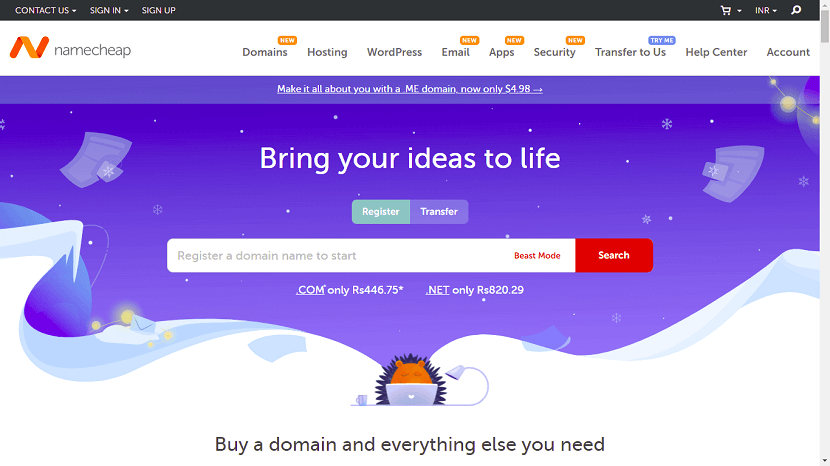

Namecheap is a leading domains, hosting and websites’ service company helping businesses worldwide to setup their online presence and reach their online success. Namecheap make it possible for anyone to create a winning web presence by providing easy domain name registration, affordable hosting plans, and all the best apps.
Namecheap will direct and point business owners to website security and privacy products from the most trusted brands around and their award-winning customer service team is available 24/7 with friendly advice to help you get your site up and running in no time.
Top Features
- Unmetered bandwidth
- Free website builder
- Domain name and privacy protection
- Free automatic SSL installation
- Free Supersonic CDN
- 30-day money-back guarantee
- Free in <24 hours website migration
Type of Web Hosting
To figure out what category you fall in, here’s a quick recap of the different hosting types and who they are for:
- Shared Hosting — Shared hosting is the most cost-effective plan for entry-level websites.
- VPS Hosting — VPS hosting is for websites that have outgrown shared hosting.
- WordPress Hosting — WordPress hosting optimized for WordPress sites.
- Dedicated Hosting — Dedicated hosting is Enterprise-level servers for large websites.
- Cloud Hosting — Cloud hosting is best for websites that are growing rapidly.
- Reseller Hosting — Reseller hosting is for agencies, web developers, and web designers.
- Managed Hosting — Managed hosting is an IT hosting model in which the client leases servers or cloud computing resources.
- Colocation Hosting — Colocation hosting is where you rent space for your IT hardware at a 3rd party provider’s data center facility.
- Self Service Hosting — Self hosting is a form of running your own website or application by setting up a server and network yourself.
- Cluster Hosting — A cluster hosting is a host that is configured to take over the role of another host server within a cluster.
Alternatives - Web Hosting Providers
If you want to explore more web hosting plans, here is some web hosting services provider companies as below:
1
2
3
4
5
Read More : You can explore here 30+ Best Web Hosting and Domain name Providers 2023
Video - Best Web Hosting For Small Business
Affordable Website Hosting for your domainIf you found this article helpful, we encourage you to share it on your social media platforms—because sharing is caring! For more information about article submissions on our website, feel free to reach out to us via email.
Send an emailWritten by RGB Web Tech
Latest Technology Trends
Latest technology trends shaping the future, including AI advancements, blockchain innovation, 5G connectivity, IoT integration, and sustainable tech solutions. Explore breakthroughs in quantum computing, cybersecurity, augmented reality, and edge computing. Stay ahead with insights into transformative technologies driving innovation across industries and revolutionizing how we live, work, and connect.
What is Linux web hosting?
Last updated on January 19, 2025 by RGB Web Tech

Linux hosting is an open source operating system where web hosting services occur with the use of a Linux-based server.
Linux web hosting can be accessed by an organization or individual, and it’s generally one of the cheapest types of hosting services for small businesses.
It's user friendly and generally offers a high level of security, with many hosting companies sharing their hosting tools according to each customer’s requirements.
Linux web hosting allows its users to share between multiple servers, and the source code can be used, modified, and redistributed freely in both commercial and non-commercial capacities.
Users of Linux often rely on cPanel to manage web development tasks and some web hosting providers include cPanel in its packages despite it being a third party application.
Advantages of Linux Hosting
- Linux hosting provides flexibility and use of open source technologies such as Apache, PHP, and MySQL.
- This hosting service is one of the most reasonable and affordable options.
- Over the years, Linux has earned a reputation for stability and safety.
- The security settings on the Linux server are highly efficient and advanced when compared to a Windows platform.
- In the current technology world, versatility is highly desirable because it ensures relevance in an ever-changing playing field. Linux hosting is versatile because it is compatible with various databases.
Disadvantages of Linux Hosting
- Linux web hosting lacks compatibility with several of the primary Windows-based scripting applications and technology.
- Certain programming languages such as ASP and its extensions are not suitable on Linux operating systems.
- Linux servers are not useful for porting of websites that have been scripted or designed for a Windows environment or background.
Web Hosting on Linux
When you are planning to create a website, a web hosting package should offer various features. Some of the necessities to consider are bandwidth, domain, and affordability. Domains are necessary for hosting a professional internet site. As the site develops and grows, bandwidth becomes necessary as more information and functions increase. The market has many different companies that offer Linux and Windows hosting packages. Linux web hosting is the more practical and affordable choice because it is not restrictive and is more adaptable.
However, internet marketing requires a proper analysis of the needs of the business for the present and future. You can opt for a cost-effective Linux hosting package, make sure that it contains all the functionality required currently and in future. Additional features such as software and web-mail are important for websites as they develop and grow.
Differences Between Linux and Windows Web Hosting
As previously stated, the Linux hosting system has multiple features such as good performance, adaptability, cost effectiveness, security, stability and so on. Likewise, the Windows web hosting has its own features and strengths that are better suited for specific files and websites.
The main difference between the two is the type of files and functionalities that is used. A website needing PHP, Perl, WordPress, MySQL, SSH and applications that require specific Apache modules run better and more quickly on Linux-based web hosting because it is specifically designed for this type of data. On the other hand, a Windows platform is ideal to host ASP Classic, Microsoft Access, ASP.NET, Microsoft SQL Server, C# or Visual Basic Development.
The price is another big difference. Because Linux web hosting is more reasonably priced, it is the more popular option among web hosting providers. The Linux web hosting platform also has more features than Windows, making it many web designer’s preferred choice.
Additionally, the two web hosting services have the following different servers and control panels:
- cPanel and Web Host Manager (WHM) are used on Linux-based hosting such as VPS, Linux Reseller and Linux Dedicated Servers.
- Plesk can be used for Windows Shared and Dedicated Servers.
Both systems need, use and store files. While Linux file names are case sensitive, Windows files are not. For example, home.html and Home.html are names of two different files on a Linux server, whereas, on a Windows server, whether it is home.html, Home.html or HOME.HTML, all files are considered the same.
While Linux hosting is considered more secure, both Linux and Windows operating systems are safe. The security is mainly reliant on the setup and administration of the server. Hosted servers typically are maintained with the current security and performance patches.
Ultimately, the decision to pick one web hosting service over the other often boils down to which one offers the best necessary capabilities specific to the user. The user interface on a Linux hosting account is the same as that on a Windows account. However, users are sometimes apprehensive about using a web host system that is different from the system of the home computer as they feel it may cause usability issues. It is a misconception that using a web host system that is different than a home computer can cause usability issues. Linux websites needs specially written code to run that is usually not related to the applications operating on a home computer. HTML files are used and read by both platforms and regular websites function with the same level of performance.
Linux web hosting services have various good attributes and performance capabilities and each website or designer has its own specific needs and techniques where one or the other platform can be more suitable. In order to understand whether Linux web hosting is best for you, or to gain better knowledge and insights specific to your business needs, Flying Cow Design can provide information and guide you in a step-by-step manner to better assess how to make the right decisions for your business.
List of Linux Web Hosting Service Providers:
1
2
3
4
5
Read More : You can explore here 30+ Best Web Hosting Providers 2023
Video - Best Web Hosting For Small Business
Affordable Website Hosting for your domainIf you found this article helpful, we encourage you to share it on your social media platforms—because sharing is caring! For more information about article submissions on our website, feel free to reach out to us via email.
Send an emailWritten by RGB Web Tech
Latest Technology Trends
Latest technology trends shaping the future, including AI advancements, blockchain innovation, 5G connectivity, IoT integration, and sustainable tech solutions. Explore breakthroughs in quantum computing, cybersecurity, augmented reality, and edge computing. Stay ahead with insights into transformative technologies driving innovation across industries and revolutionizing how we live, work, and connect.
What is Windows Web Hosting?
Last updated on January 19, 2025 by RGB Web Tech
The necessity of having a dynamic website with visually attractive elements has now become an essential factor for many individuals. Windows web hosting is one of the most popular and feature-rich services offered by hosting companies that meet these needs markedly.
Generally speaking, there are two main options available for web hosting: Windows and Linux. Windows hosting with its dynamic technology can help you stay ahead of the competition with eye-catching pages that run smoothly.
What Is Windows Hosting Meaning?
It is typically a web hosting server that runs by the Windows OS or its other variants. Your website pages can efficiently have access to web development features of Windows when you use a hosting service of this kind.
The popularity of Windows as an operating system around the world has paved the way for windows hosting meaning to become hugely favorable among website owners. Currently, more than 75% of the desktop operating system’s global market belongs to Windows. Microsoft is continually researching this product, and we can see the improvements it makes on Windows every year not only in the technical aspects but also in support of various scripts.
Advantages of Windows Web Hosting Hosting
When you are looking for a hosting solution, you will come across numerous options. Windows hosting holds a prominent place among them. If you are looking for a feature-rich hosting solution, you may take a look at this type of hosting. However, it is better to evaluate its pros and cons before you proceed.
1. A Microsoft-Friendly Option
Many websites and businesses rely on different products and tools of Microsoft like FrontPage and ASP to function properly. The same conditions apply to Microsoft Exchange for efficient management of emails and Microsoft SharePoint for better collaboration between team members.
These products offer excellent quality and have proved to be the best option in their category. For instance, ASP is much easier to use than other server-side services and integrates perfectly with many other languages as well.
Therefore, windows shared hosting counts as a perfect solution for this purpose that provides you with enough capabilities to build dynamic and interactive websites. Moreover, many tech professionals are accustomed to maintaining and updating windows and its programs. This familiarity with Windows OS makes it easy for them to work with the server interface, too.
2. Powerful and Simple
Windows hosting services are often based on Windows Server OS. This operating system enables you to manage your server and scale it without any concerns about its security.
Additionally, these windows website hosting packages come with the user-friendly Plesk control panel that makes it much easier for you to update your website and make changes where needed. The intuitive interface of Plesk, with its great focus on commercial websites, lets you manage multiple sites conveniently. Plus, it’s completely compatible with the most popular content management systems, including WordPress and Joomla.
Above all, all the Microsoft products are developed in a way to support one another. This advantage has attracted developers towards creating various applications in complete compatibility with Windows. Similarly, open-source tools like MySQL and PHP run efficiently on this hosting platform, and this feature isn’t available on Linux to this extent.
3. A Reasonable Solution
It used to be a costly service due to the high price of Microsoft licenses. However, these days you can find affordable plans as low as $10 a month from different service providers. Although Windows hosting packages are costlier than Linux, compared to the features you receive in return for the budget, you can rest assured that your money is spent well.
4. It Runs on Windows Operating System
Most of us are familiar with Windows operating system which windows shared hosting runs on it. Hence, you don’t have to go through the struggle of getting used to it. In other words, you don’t have to go through a lengthy learning curve while you are trying to work with this hosting solution. You will find specific features, which you can use according to your preferences. On these plans, you will discover the Plesk control panel. This delivers an intuitive experience than cPanel, which you can find in Linux hosting.
5. It Is Compatible With Other Windows Tools
One of the main reasons why people go for this type of hosting is the presence of numerous familiar tools. This makes life easy for them when managing the hosting plan. For example, if your website is developed with ASP.NET, Windows hosting would be a great solution available to consider. On the other hand, you will notice how compatible your hosting plan with Microsoft SQL is. You might even be able to use Microsoft Exchange as the email server.
6. It Comes With a Plesk Control Panel
As mentioned earlier, hosting windows server comes with a Plesk control panel. You can access straightforward controls on this control panel. Hence, managing your hosting plan will never be a challenging thing. If you want to make any changes or updates to your website, you can easily do them. You will even be able to manage multiple domains and websites in your hosting solution without a problem.
Disadvantages of Windows Hosting
1. It Is Not Secure as Linux Hosting
When you make a cross-comparison between the security of Windows hosting and Linux hosting, you will notice some significant differences. In other words, Linux hosting is more secure. Windows hosting solutions are highly vulnerable to numerous attacks, including ransomware attacks. However, Linux hosting is more confident, and you will keep peace of mind. Since security is a significant concern, you must be mindful of this fact as you pick a hosting solution.
2. It Is Expensive
You will have to spend more money to get this type of hosting when compared to Linux hosting. However, this varies depending on the hosting solutions provider. For example, if you look at Hostgator, you will notice that Linux hosting plans start at $2.75 per month, whereas Windows hosting plans start at $4.76 per month. You will be able to save money in the long run by going ahead with Linux hosting.
3. It Is Less Stable
Linux servers are well-known for their dependability. They seldom need to be restarted and can perform many tasks at once. On the other hand, Windows servers have difficulty running many programs and processes simultaneously without crashing. Like any other web technology, Windows servers have improved over time and are anticipated to continue to do so. However, they aren’t relatively as constant in their performance as Linux servers.
However, this is another area where selecting the appropriate web hosting company may make a significant impact. When a Windows hosting business offers a 99.9% uptime guarantee, it means they’ve taken all the necessary steps to keep their Windows servers running as smoothly as possible. A competent web hosting company can assist overcome the gap in server stability between Windows and Linux hosting by paying attention to maintenance and planning.
Who Should Choose Windows Web Hosting Server?
Windows hosting, compared to its Linux counterpart, has many areas with exceptional strength that makes it a perfect match for a hosting service. It’s essential for some web programming languages and scripts such as ASP, Visual Basic, and C# to work seamlessly.
Additionally, it supports commonly-used databases like SQL and MS Access so that you won’t have any difficulty managing your database.
Frequently Asked Questions
Does Windows Hosting Support WordPress?
One of the common questions among users is “can you host WordPress on a Windows server?“. Microsoft provides a set of tools and a robust platform that is capable of hosting WordPress. One of the most important things about Microsoft’s web platform is its interface. The Microsoft Windows server family provides several roles which can take control of complicated IT tasks.
Does Windows Hosting Support PHP?
The answer is yes. Most shared hosting services of windows support PHP by default. If PHP is not enabled on your host, you should ask your hosting provider to activate it for you.
Conclusion
We know what is windows web hosting. Windows shared hosting is an excellent option for a broad range of requirements. Although you will need to pay more money compared to the Linux solution, the efficiency and advantages of windows web hosting will outweigh its costs. So if you want high functionality and integration with popular applications, don’t hesitate to go for this service.
List of Windows Hosting Service Providers:
1
2
3
4
5
Read More : You can explore here 30+ Best Web Hosting Providers 2023
Video - Best Web Hosting For Small Business
Affordable Website Hosting for your domainIf you found this article helpful, we encourage you to share it on your social media platforms—because sharing is caring! For more information about article submissions on our website, feel free to reach out to us via email.
Send an emailWritten by RGB Web Tech
Latest Technology Trends
Latest technology trends shaping the future, including AI advancements, blockchain innovation, 5G connectivity, IoT integration, and sustainable tech solutions. Explore breakthroughs in quantum computing, cybersecurity, augmented reality, and edge computing. Stay ahead with insights into transformative technologies driving innovation across industries and revolutionizing how we live, work, and connect.
What is Shared Web Hosting?
Last updated on January 19, 2025 by RGB Web Tech

Deciding on the hosting service for a website can be tough. Hosting service providers offer different packages and plans, which can leave you confused about which one to choose. To hit the right note, you should gain information about different types of hosting plans and pick the correct one based on your needs.
Shared web hosting can be a good choice when your website is still in its infancy and has not been expanded to require specific resources and access. But in most cases, there is a day when shared hosting will no longer meet the needs of your website. The advantages of shared hosting and also disadvantages of shared hosting can make them a viable choice or a troublesome limitation depending on your circumstances and needs. In the remainder of this article,
Here we discuss what is shared hosting that comes as a popular choice for many users launching their first website. In the following paragraphs, we will examine shared hosting pros and cons to determine the strengths and weaknesses of this type of hosting.
What Is Shared Hosting Meaning?
Shared hosting means are the most affordable option to use for running a website. As a shared web hosting definition, multiple sites share a single server when they run on shared hosting. That’s the reason why these services come at a lower price compared to the dedicated ones.
In most cases, the user doesn’t know other users who share the server. But, all users have access to the platform of the server to see the databases, find out about email accounts, and access other provided features. The allowed capacities are limited by the service provider, which is often described in the details of the package you buy.
Generally speaking, a shared hosting server is proper for a personal weblog, startups, local businesses, or other small websites that don’t need very high bandwidth or professional settings. Websites with high volume should go for VPS or other dedicated options available on the market. Owners of these sites can take advantage of more in-depth controls and more stable performance if they choose plans with higher prices than the shared hosting. In the past article, we have mentioned the advantages of shared hosting.
How Does Shared Hosting Work?
Shared hosting plans are cheap and affordable. Before you go ahead with it, you will come across the need to figure out what is shared web hosting and how it works. Shared hosting is where you will be provided with hosting space in a server, which hosts multiple other websites. It can even contain hundreds or thousands of websites. The server resources, including processing speed, RAM, and hard drive space, are shared between all the websites hosted. Due to the same reason, the performance of your website hosted on the shared hosting server can be affected by another website’s performance on the same server. This is something that you will need to be mindful of.
Advantages of Shared Hosting
Now you have answers to the question of what is shared hosting. There are some drawbacks and benefits of shared web hosting that you must know before deciding whether or not to use this kind of web hosting. In the following, we are going to mention some of the benefits first:
1. Cost-Effective: One of the advantages of shared hosting is being cheap; shared hosting services are the cheapest type of hosting services you can supply. In this type of service, the resources of a server are divided into several hundred or even several thousand websites. As a result, the cost per user is significantly reduced. The pricing plans you find for these services fall somewhere between $2.5 to $10 per month.
2. Simple User Interface: One of the main benefits of shared hosting is a simple user interface. Shared hosting is generally managed by control panels. This means that when you purchase the service, you are provided with a web interface with the ability to make changes, upload, create a site and add domains, and more. Due to the simple user interface in these types of management panels, you no longer need to have high knowledge of Linux or Windows servers and can use your service without paying attention to the details. The control panels provided on these services are generally Plesk, Cpanel or Solidcp.
3. Security : As with other shared hosting services, security is of particular importance. If there is a security problem with these types of services, this deficiency can cause problems for a large number of services running on that server or all of them. For this reason, companies offering these types of services are particularly sensitive to their security checks and even to the limitations of protecting users, so you don’t have to worry about security. Periodic server updates, data backups, restrictions on service changes, and the inability to use some protocols are security issues that generally apply to these services.
4. Support : One of the main shared hosting benefits is that it does not require server management. As mentioned above, server-side security issues are controlled by the provider on an ongoing basis in shared services. But security reviews are not the only things that need to be done to make a service sustainable. Hosting networks are generally complex systems, and because of this complexity, the possibility of disruption or a technical difficulty is very high. Investigating and resolving such cases can, in many cases, require increased knowledge and hours, or even days. It is up to the server to monitor and resolve such problems in shared services.
Technical support is another strength and benefit of shared web hosting that can, in many cases, make your work easier and return valuable hours to you. Generally, quality hosting services provide relatively extensive technical support. The technical teams prevent the services from being interrupted by a 24-hour review and investigation of the services and will resolve the interruptions as soon as possible. More importantly, you can contact your hosting service support experts at any time in different ways to investigate and troubleshoot any issues that may arise on these services.
5. Scalable : Scalability is among the important advantages of shared hosting. Since new and small sites don’t see much traffic, shared hosting works best for them. This feature allows them to remain within limits established by many users drawing from a shared server’s finite resources. In fact, shared hosting solutions are not just for personal website owners and casual bloggers. It can handle up to 100,000 visitors a month, translating to roughly over 3000 visitors daily. When a website gets to a certain level of monthly traffic, it may need to upgrade to a different rank of shared hosting or switch to another hosting entirely.
In sum, shared hosting services may require you to hire a server administrator to maintain the service. This type of support and management of service is generally not provided on virtual servers or will be significantly limited.
6. You Can Host Multiple Domains : You can have multiple domains under the user directory while using a shared hosting plan. The hosting provider will deliver a convenient interface, which you can use to manage all the websites. This interface can help you to overcome complexity in managing multiple websites.
7. It’s Professionally Managed : The maintenance cost associated with shared hosting is low. In fact, you will be able to manage the website as well professionally. All you have to do is seek the assistance of a professional team and hand over the job to them.
8. It Can Host Dynamic Websites: Dynamic websites are the websites that change dynamically based on how a user is browsing. Quora, Facebook, and Twitter are perfect examples of such dynamic websites. They are usually based on content management systems. You can easily host a dynamic website within your shared hosting plan.
Disadvantages of Shared Hosting
We have mentioned some benefits of shared hosting. There are also some factors that explain why shared hosting is bad for some businesses:
1. Resource Constraint : In shared hosting, the resources provided to your site are limited, and the overall server resources are shared among all users; this is one of the leading shared hosting drawbacks. Resource constraints become more critical when your site expands and needs more resources to operate. Lack of resources can severely impact your site’s performance, slow down the site, or interrupt loading. If the site in question uses more resources than what is specified by the server, access to the service may be restricted by the provider rules.
2. Lack of Full Access : One of the main Disadvantages of Shared Hosting is a lack of access. As mentioned earlier, shared hosting services have limitations on the amount and type of user access to server settings. This could be due to security issues or the impact of changes to other users’ services. If you need to make any changes to the server for any reason, you should discuss this with the server to make these changes if possible. In many cases, such changes cannot be made to these services. In fact, you do not have much authority for changes in shared services.
3. Influenceable : Shared services generally have a lot of investigations to control the quality of service. Different websites operate typically in the range of resources provided to them, using the Isolated Application Pool, which essentially prevents over-consumption on one website and affects it on other websites. However, there are other problems that if happen to other websites, can negatively impact your website.
For example, sending spam by a website can place the IP of the email service in the RBLs (which collect the IP of the spam senders). Since IP is shared in these services, this can also affect sending emails by your domain, and your sent emails are known to be spam.
4. Less Stable : Technologies such as cloud hosting, load balancing, and redundancy have greatly increased the ability of servers to provide more stable services. However, shared services are still less stable than dedicated services. The issues mentioned in previous sections are among the reasons that influence the sustainability of shared services. If your website requires a very high level of service sustainability, even the best-shared services may not meet your needs.
5. Insufficient Support: Insufficient support is one of the big shared hosting cons. Shared hosting companies often assert to provide easy support, but this support might not be enough. In other words, if the website meets head-on a problem, they might not be able to help you with that. If your problem goes under, they will just restart it for you.
If you ask why it continues going under, they might be unaware. And in the end, you might soon find out that you are talking to someone who is not a professional WordPress pro, but instead someone who is a newcomer and is reading from a prepared FAQ. If you have bigger problems, you have to call an expert help from outside, which could cost a lot for you.
6. More Vulnerable Against Security Issues : Another disadvantage of shared hosting is vulnerability to Security Issues and because of which you should just stay away from it. If a hacker hacks any website on a server, then other websites also face the potential threat. And if the main server itself gets hacked, then every website on the server threats Simultaneously. So, if you should try to work without mistakes, your website is at risk in a shared hosting environment.
7. Extra Payment For SSL Certificates : In general, you have no problem with the initial cost of shared hosting, because it is not high, but when you want to add a feature, you have to spend more. that is one of the main shared hosting disadvantages. One of these features is SSL certificates. Many shared hosting companies don’t prepare SSL certificates for free, and this causes your website to show a “Not Secure” warning.
However, these certificates are actually available for free. But, you still result up paying for them on shared hosting. So the cost of SSL Certificates becomes one of the biggest shared hosting disadvantages because you have to add up the cost of buying it from shared hosting.
Who Should Buy a Shared Hosting Server?
Overall, for those who are starting a website from the ground up, there is no alternative to shared hosting. It’s by far the best choice for this group of users. Also, shared hosting is the right fit for those who can’t invest much in their hosting and need to keep their costs down. Beginner users with little experience regarding website management who choose Joomla and WordPress cms as their CMS could also benefit from this service extensively. Furthermore, in the beginning, it’s hard to predict how much space and requirements a website needs precisely. To this end, shared hosting is a proper flexible solution that allows you to manage the unknowns easier.
Things To Consider When Choosing a Shared Hosting Plan
Upon understanding what is shared website hosting and the benefits of shared web hosting, you will need to explore the factors that can contribute towards the best results out of your shared hosting plan. Here are some important tips that you need to consider as you try to obtain your shared hosting plan.
1. Uptime : One of the very first things you should do as of now is to take a look at the uptime. If the shared hosting plan is leading you to continuous downtimes, you will end up with struggles. This is why you should be mindful of the uptime. You can then make your website available for visitors at all times.
2. Speed : Next, you should be mindful of safety. No person would like to wait for more than 3 seconds for a page of your website to load. While keeping this in mind, you should pay extra attention to the speed of the website.
3. Security : Shared hosting can be risky as your server will be shared with numerous other entities. This is why you should be mindful of the security of the website. Then you will be able to keep it away from threats.
4. Resources : There should be enough resources available for you to host the website. This is something that you should double-check and see. If not, you will run into struggles because of a lack of resources.
5. Easy to use dashboard : You never expect to go through any struggles when using the web hosting account. This is why you should check and see whether an easy-to-use dashboard is available or not.
6. Support : Last but not least, you need to make sure that proper support is available to you. Then you can get answers to all the questions you have promptly.
When we not use Shared Hosting
Your site is facilitated on a standard server with numerous different sites with shared Hosting. Subsequently, the server is arranged to permit well-known structures, for example, WordPress, to run effectively with traditional settings. To use a custom website system that isn’t introduced on the server or improve server assets for webpage explicit undertakings, it is likely best to use a web hosting or devoted hosting program. These projects require much more information and framework the executive’s experience, yet they permit you to alter the server precisely to your necessities.
Introducing WordPress or utilizing essential coding, for example, HTML or CSS, doesn’t need root access and is effectively finished with the underlying arrangement of a joint facilitating account. Email, essential security strategies, such as ModSecurity, Sucuri, and SSL testaments, likewise don’t need root access and can be applied rapidly without broad information.
Except if you want root admittance to introduce programming or unique settings, shared Hosting is the best spot to begin. Nonetheless, on the off chance that you wish to teach particular programming or set up another server to set up and run your site, consider Hosting a VPS or committed server.
Why Start with Shared Hosting?
Shared Hosting is the least complicated type of web Hosting to begin. Progressed server settings expect you to oversee server assets and upgrade server settings yourself. In a joint program, this is dealt with for you! Likewise, you can pick a joint undertaking with the support that your business needs—that way, you just get compensation for what you use. Assuming you at any point expected to change to a VPS or devoted hosting program, you can undoubtedly overhaul your application to something with more control.
In addition to shared Hosting, it is natural to have numerous destinations simultaneously. cPanel, Softaculous, and other engineer devices simplify the same goals, send off new locales, and attempt new things. You can undoubtedly test on different destinations without influencing your center business. Most independent ventures need a little data site to assist them with building mindfulness and cultivating leads while beginning a site.
Likewise, while sending off a site, traffic will probably be low until the site positions in web indexes. Utilizing a standard Hosting plan at this phase of development will assist you with setting aside cash while distinguishing your image, constructing an internet-based presence, and fostering an SEO technique.
Shared Hosting turns out best for primary, centered sites. Online journals, one-page pages, or destinations that sell a little assortment of items or administrations can all function admirably in shared Hosting. WordPress and other well-known substances the executives programming are frequently excellent for shared Hosting when a site has standard, predictable traffic. Some web-based business stages can, without much of a stretch, sudden spike in demand for shared Hosting, even with a wide assortment of items; however, a few scenes perform better compared to other people.
Frequently Asked Questions
Is Shared Hosting Good?
Shared hosting is a suitable option for small businesses that require small websites. Since every website doesn’t need to use its quota, then it works for most of the small businesses. It is really affordable for such organizations and also profitable for web hosting companies.
Is Shared Hosting Secure?
The answer is yes! Shared hosting has the same amount of security risks as other kinds of hosting. If hackers get the chance to hack your website, they can redirect your users to unwanted pages, display unwanted content and spam the customers.
What Is the Purpose of Shared Hosting?
If you are wondering what does shared hosting mean, we should say that it is a kind of web hosting capable of hosting multiple websites on a single server. In this way, several websites can host their website files and utilize the resources together. As a result, the cost for shared hosting plans is much more reasonable than the other kinds of plans.
If you are interested to compare wordpress hosting vs web hosting , this article can help you!
Is Shared Hosting Slow?
One of the most important shared hosting drawbacks is its speed. The performance of your website highly depends on the activity of other websites which are hosted on the same plan and also by the server infrastructure itself.
How Much Traffic Can Shared Hosting Handle?
Good shared hosting is capable of handling about 1.5–2k traffic per hour. It actually depends on how website owners optimize their website pages. With the average size of 700kb to 1.3 MB of website pages, we can say that shared hosting can handle 7–12 k daily traffic without any problem. But for more traffic, users may experience some slow loading issues.
If you are interested in comparing vps vs vds , this article can help you!
Conclusion
In this article, we have mentioned some of the pros and cons of shared hosting that can affect your business. It is important to choose the right kind of Web Hosting service for your website to attract more users to visit your site and also rank higher in SERP. We hope that this article can help you have a better understanding of shared hosting limitations, pros, and cons!
List of Shared Hosting Service Providers
1
2
3
4
5
Read More : You can explore here 30+ Best Web Hosting Providers 2023
Video - Best Web Hosting For Small Business
Affordable Website Hosting for your domainIf you found this article helpful, we encourage you to share it on your social media platforms—because sharing is caring! For more information about article submissions on our website, feel free to reach out to us via email.
Send an emailWritten by RGB Web Tech
Latest Technology Trends
Latest technology trends shaping the future, including AI advancements, blockchain innovation, 5G connectivity, IoT integration, and sustainable tech solutions. Explore breakthroughs in quantum computing, cybersecurity, augmented reality, and edge computing. Stay ahead with insights into transformative technologies driving innovation across industries and revolutionizing how we live, work, and connect.